Tuesday, October 1, 2013

Sky Events October 2013


Moon Phases

Fri., October 4, 8:34 p.m. EDT

New Moon

The Moon is not visible on the date of New Moon because it is too close to the Sun, but can be seen low in the east as a narrow crescent a morning or two before, just before sunrise. It is visible low in the west an evening or two after New Moon.


Fri., October 11, 7:02 p.m. EDT

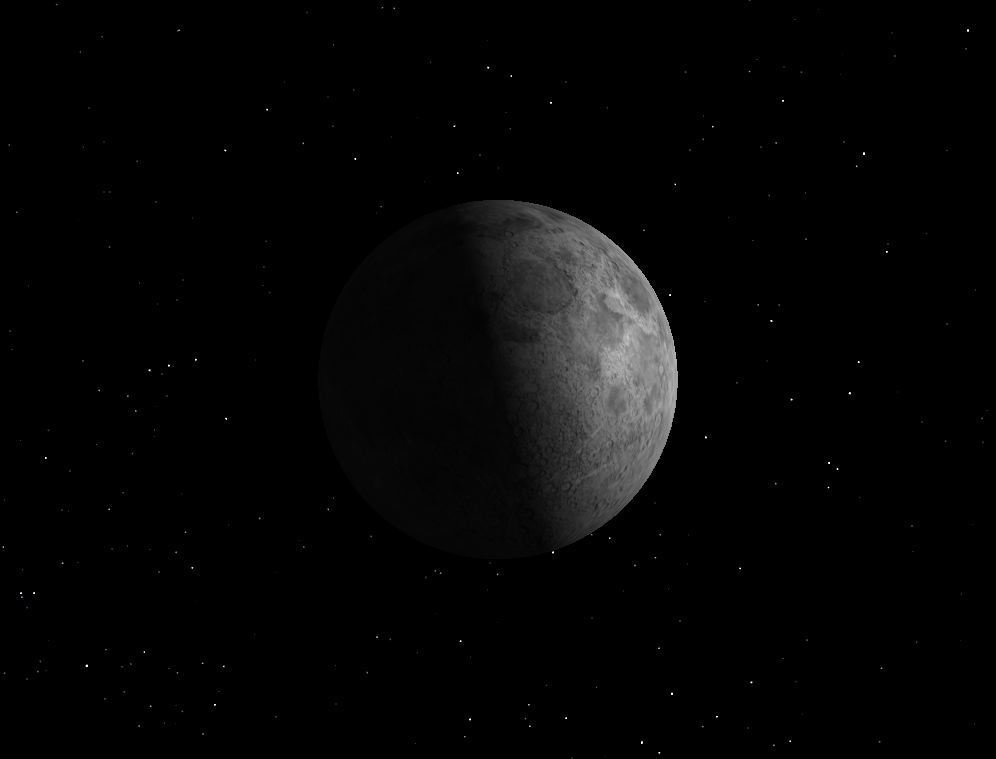
First Quarter Moon

The First Quarter Moon rises around 2:00 p.m. and sets around 12:30 a.m. It dominates the evening sky.

Fri., October 18, 7:38 p.m. EDT

Full Moon

This is the first Full Moon following the Harvest Moon last month, and so is known as the Hunter’s Moon. It rises around sunset and sets around sunrise, the only night in the month when the Moon is in the sky all night long. The rest of the month, the Moon spends at least some time in the daytime sky.

Sat., October 26, 7:40 p.m. EDT

Last Quarter Moon

The Last Quarter Moon rises around 11:30 p.m. and sets around 2:00 p.m. It is most easily seen just after sunrise in the southern sky.


Observing Highlights

Thu.–Thu., October 3–17, before morning twilight

Zodiacal Light

This faint light reflected from countless pieces of interplanetary material will be visible in dark skies for the next two weeks. It rises in a conical shape along the ecliptic before morning twilight.

Thu., October 3, 10 a.m. EDT

Uranus at opposition

The planet Uranus will be in opposition to the Sun, and visible all night.

Sun., October 6, evening twilight

Saturn, Mercury, and the Moon

A triple conjunction low in the southwest just after sunset.

Wed., October 9, evening twilight

Mercury at greatest elongation east

Mercury will be at its greatest elongation east of the setting Sun, but this will be an unfavorable opposition because of the low angle of the ecliptic to the horizon. Saturn will be 5 degrees above Mercury.

Fri./Sat., October 11/12, 12:32–1:37 a.m. EDT

Triple shadow transit on Jupiter

It is very rare that three of Jupiter’s moons cast their shadows on Jupiter simultaneously. This will be visible tonight in telescopes with at least 90 mm. aperture. Later, the moons themselves will transit Jupiter’s disk. Some events will happen before Jupiter rises in your location (around midnight). This event is only visible in its entirety in eastern North America, taking place before  Jupiter rises on the West Coast.

EDT    CDT            MDT            PDT
11:12   10:12            9:12            8:12          Callisto’s shadow enters
11:24   10:24            9:24            8:24          Europa’s shadow enters
12:32   11:32           10:32           9:32          Io’s shadow enters
1:37     12:37           11:37          10:37         Callisto’s shadow leaves
1:48     12:48           11:48          10:48         Io begins transit
2:01     1:01            12:01           11:01         Europa’s shadow leaves
2:02     1:02            12:02           11:02         Europa begins transit
2:44     1:44            12:44           11:44         Io’s shadow leaves
4:02     3:02            2:02            1:02            Io ends transit
4:42     3:42            2:42            1:42            Europa ends transit

Sat., October 12, 10 p.m. EDT

Juno and the Moon

The 9th magnitude asteroid Juno will be just north of the 9-day-old gibbous Moon, and close to the two wide double stars in western Capricornus, Algedi and Dabih.

Tue., October 15, before dawn

Comet ISON, Mars, and Regulus

An unusual grouping of a comet, a planet and a star, as Comet ISON puts in an early appearance. This image is based on early estimates of ISON’s brightness. It now is known to be nowhere as bright as shown, but may be visible in binoculars.

Wed., October 16, after sunset

Venus and Antares

Look just below Venus for the red giant star Antares. If you look carefully, you may also be able to spot Mercury and Saturn.

Wed./Thu., October 16/17, 4:57–7:09 a.m. PDT

Double shadow transit on Jupiter

Observers on the West Coast will have the best chance of seeing this event, which mostly takes place after sunrise in the East.

EDT    CDT            MDT            PDT
6:30     5:30            4:30            3:30            Ganymede’s shadow enters
7:57     6:57            5:57            4:57            Io’s shadow enters
9:13     8:13            7:13            6:13            Io begins transit
9:27     8:27            7:27            6:27            Ganymede’s shadow leaves
10:09   9:09            8:09            7:09            Io shadow leaves

Fri., October 18, 7:50 p.m. EDT

Penumbral Lunar Eclipse

The Moon will pass through the edge (penumbra) of the Earth’s shadow just after moonrise on the East Coast of North America. This eclipse is very slight, so you will have to look closely so as not to miss it. Look for a shading on the lower half of the Full Moon. It will also be visible in Africa, Europe, and the Middle East.

Fri./Sat., October 18/19, 2:25–4:37 a.m. EDT

Double shadow transit on Jupiter

Most of this event will be visible all across North America.

EDT    CDT            MDT            PDT
2:00     1:00            12:00          11:00          Europa’s shadow enters
2:25     1:25            12:25          11:25          Io’s shadow enters
3:41     2:41            1:41            12:41          Io begins transit
4:37     3:37            2:37            1:37            Europa’s shadow leaves
4:37     3:37            2:37            1:37            Europa begins transit
4:38     3:38            2:38            1:38            Io’s shadow leaves

Fri./Sat., October 25/26, 4:37–6:31 a.m. EDT

Double shadow transit on Jupiter

All of this event will be visible all across North America.

EDT    CDT            MDT            PDT
4:18     3:18            2:18            1:18            Io’s shadow enters
4:37     3:37            2:37            1:37            Europa’s shadow enters
5:32     4:32            3:32            2:32            Io begins transit
6:31     5:31            4:31            3:31            Io’s shadow leaves
7:10     6:10            5:10            4:10            Europa begins transit
7:14     6:14            5:14            4:14            Europa’s shadow leaves
7:46     6:46            5:46            4:46            Io ends transit


Planets


Mercury is well placed in the evening sky for observers in the southern hemisphere, but very low for northern observers.


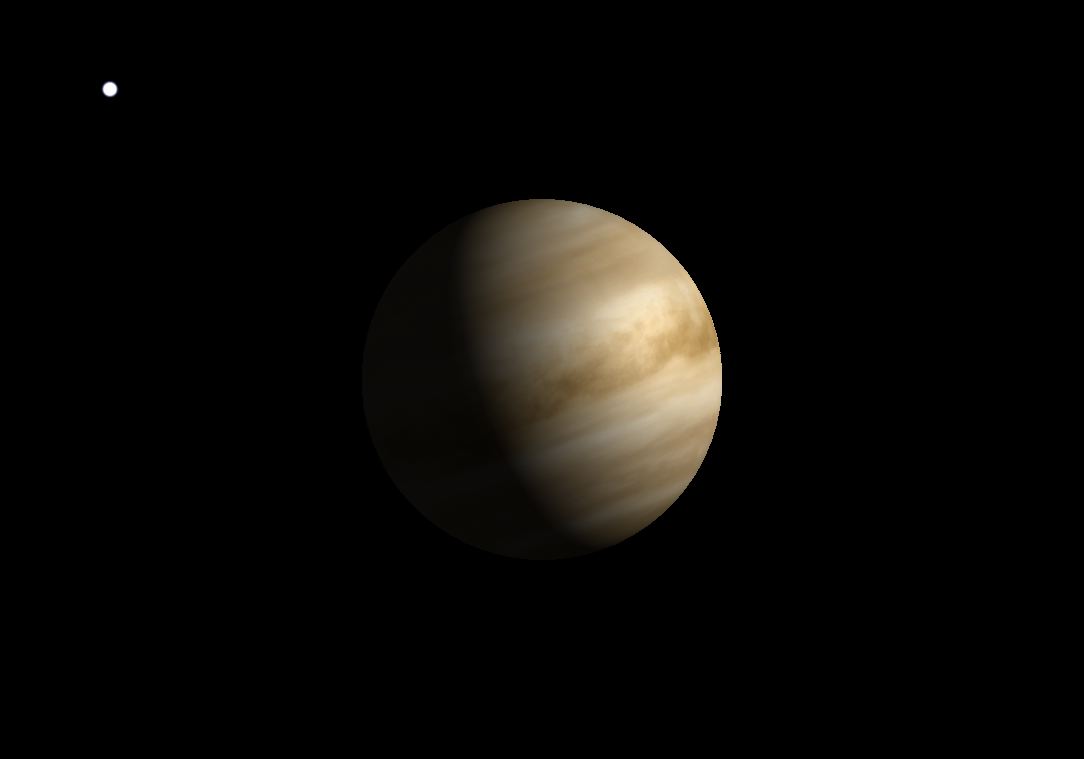
Venus is now a bright “evening star” setting just after the sun.


Mars is now a bright object in Leo in the morning sky. Mars will have a close encounter with Comet ISON on October 15.


Jupiter is the brightest object in the morning sky all month. It is located in Gemini. There are several double shadow transits this month, plus a very rare triple shadow transit on October 11/12.


Saturn vanishes into evening twilight this month.


Uranus is in opposition on October 3. It is visible in Pisces all night.


Neptune is visible in Aquarius most of the night, setting around 3 a.m.


Geoff Gaherty
Starry Night Software Support
All graphics © 2013 Starry Night Software

Monday, September 9, 2013

Sky Events September 2013


Moon Phases

Thu., September 5, 7:36 a.m. EDT

New Moon

The Moon is not visible on the date of New Moon because it is too close to the Sun, but can be seen low in the east as a narrow crescent a morning or two before, just before sunrise. It is visible low in the west an evening or two after New Moon.


Thu., September 12, 1:08 p.m. EDT

First Quarter Moon

The First Quarter Moon rises around 2:30 p.m. and sets around 12:20 a.m. It dominates the evening sky.

Thu., September 19, 7:13 a.m. EDT

Full Moon

The Full Moon of September is the Full Moon closest to the equinox on September 22, so is called the Harvest Moon. It rises around sunset and sets around sunrise, the only night in the month when the Moon is in the sky all night long. The rest of the month, the Moon spends at least some time in the daytime sky.

Thu., September 26, 11:55 p.m. EDT

Last Quarter Moon

The Last Quarter Moon rises around 11:50 p.m. and sets around 3:00 p.m. It is most easily seen just after sunrise in the southern sky.


Observing Highlights

Tue.–Tue., September 3–17, before morning twilight

Zodiacal Light

This faint light reflected from countless pieces of interplanetary material will be visible in dark skies for the next two weeks. It rises in a conical shape along the ecliptic before morning twilight.

Sun., September 8, sunset

Venus and the Moon

The thin waxing crescent Moon passes just south of the bright planet Venus, low in the western sky just after sunset. Spica is to their right and Saturn is to their left.

Mon., September 9, before morning twilight

Mars in the Beehive

The planet Mars appears against a glittering background of stars as it poses in front of the Beehive star cluster, Messier 44.

Thu., September 19, just after sunset

Saturn and Venus

Saturn and Venus will be in conjunction, best seen shortly after sunset. Spica and Mercury will probably be lost in twilight for northern observers, but will be better placed in the southern hemisphere.

Sun., September 22, 4:44 p.m. EDT

Equinox

The Sun crosses the celestial equator moving from north to south, heralding the beginning of autumn in the northern hemisphere.


Wed., September 25, just after sunset

Mercury and Spica

Observers in the southern hemisphere will see Mercury pass close to the bright star Spica about half an hour after sunset. Venus and Saturn ride high above them.


Planets


Mercury is well placed in the evening sky for observers in the southern sky, but very low for northern observers.


Venus is now a bright “evening star” setting just after the sun.


Mars is now a bright object in the morning sky. Mars is in Cancer, passing in front of the Beehive cluster on September 9.


Jupiter is the brightest object in the morning sky all month. It is located in Gemini.


Saturn is low in the southwestern sky as dusk falls, and sets around 9 p.m. It is located in Libra all month.


Uranus is in Pisces, heading for opposition on October 3. It is visible most of the night.


Neptune, just past opposition, is visible in Aquarius all night.


Geoff Gaherty
Starry Night Software Support
All graphics © 2013 Starry Night Software

Friday, August 2, 2013

Sky Events August 2013


Moon Phases

Tue., August 6, 5:51 p.m. EDT

New Moon

The Moon is not visible on the date of New Moon because it is too close to the Sun, but can be seen low in the east as a narrow crescent a morning or two before, just before sunrise. It is visible low in the west an evening or two after New Moon.

Wed., August 14, 6:56 a.m. EDT

First Quarter Moon

The First Quarter Moon rises around 2:30 p.m. and sets around 12:30 a.m. It dominates the evening sky.

Tue., August 20, 9:45 p.m. EDT

Full Moon

The Full Moon of August is usually called the Corn Moon, Sturgeon Moon, Red Moon, Green Corn Moon or Grain Moon. In Cree it is called Opunhopizun, meaning “moon young ducks begin to fly.” The Full Moon rises around sunset and sets around sunrise, the only night in the month when the Moon is in the sky all night long. The rest of the month, the Moon spends at least some time in the daytime sky.

Wed., August 28, 5:35 a.m. EDT

Last Quarter Moon

The Last Quarter Moon rises around 11:30 p.m. and sets around 2:45 p.m. It is most easily seen just after sunrise in the southern sky.


Observing Highlights

Sat., August 3, 9 p.m. EDT

Juno at opposition

The asteroid 3 Juno reaches opposition in eastern Aquarius. Four nights later it crosses the boundary into the constellation Aquarius, where it remains until September 1, when it continues into Capricornus.

Fri, August 9, sunset

Venus and the Moon

The thin waxing crescent Moon passes just south of the bright planet Venus, low in the western sky just after sunset.

Sun. and Mon., August 11 and 12, all night

Perseid meteor shower

The peak of the Perseid meteor shower, usually the best in the year, occurs in the middle of the day on Monday August 12, so both the night before and the night after will both be good to observe meteors. Usually meteors are more frequent after local midnight, around 1 a.m. local daylight saving time. The crescent moon setting before 11 p.m. won’t interfere with the meteors, which are best observed from a dark country location.

Mon., August 12, evening

Saturn and the Moon

Saturn will be just above the waxing crescent Moon.

Mon., August 26, 10 p.m. EDT

Neptune at opposition

The planet Neptune will reach opposition to the Sun in the constellation Aquarius. It will be visible all night in binoculars or a small telescope.

Sat., August 31, morning

Jupiter and the Moon

Jupiter will be just to the left of the waning crescent Moon.


Planets


Mercury was at its greatest elongation west of the Sun on July 30, so will be well placed for observation just before sunrise in the eastern sky for observers in the Northern Hemisphere for the first half of August.


Venus is now a bright “evening star” setting just after the sun.


Mars is now a bright object in the morning sky. For the first three weeks of August, Mars is in Gemini, then on August 25 it moves into Cancer.


Jupiter is the brightest object in the morning sky all month. As the month begins, three planets, Jupiter, Mars and Mercury, are all gathered together in Gemini. Jupiter stays in Gemini all month, while the others move off into Cancer.


Saturn is low in the southwestern sky as dusk falls, and sets around 11 p.m.


Uranus is in Pisces, rising in the late evening.


Neptune is in opposition in Aquarius on August 26, and is visible all night.


Geoff Gaherty
Starry Night Software Support
All graphics © 2013 Starry Night Software